



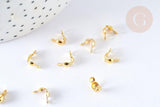
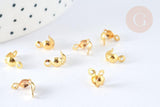
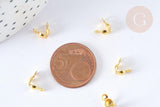



Ask about 304 stainless steel gold ball chain knot covers 7.5mm, x10 (G7321)
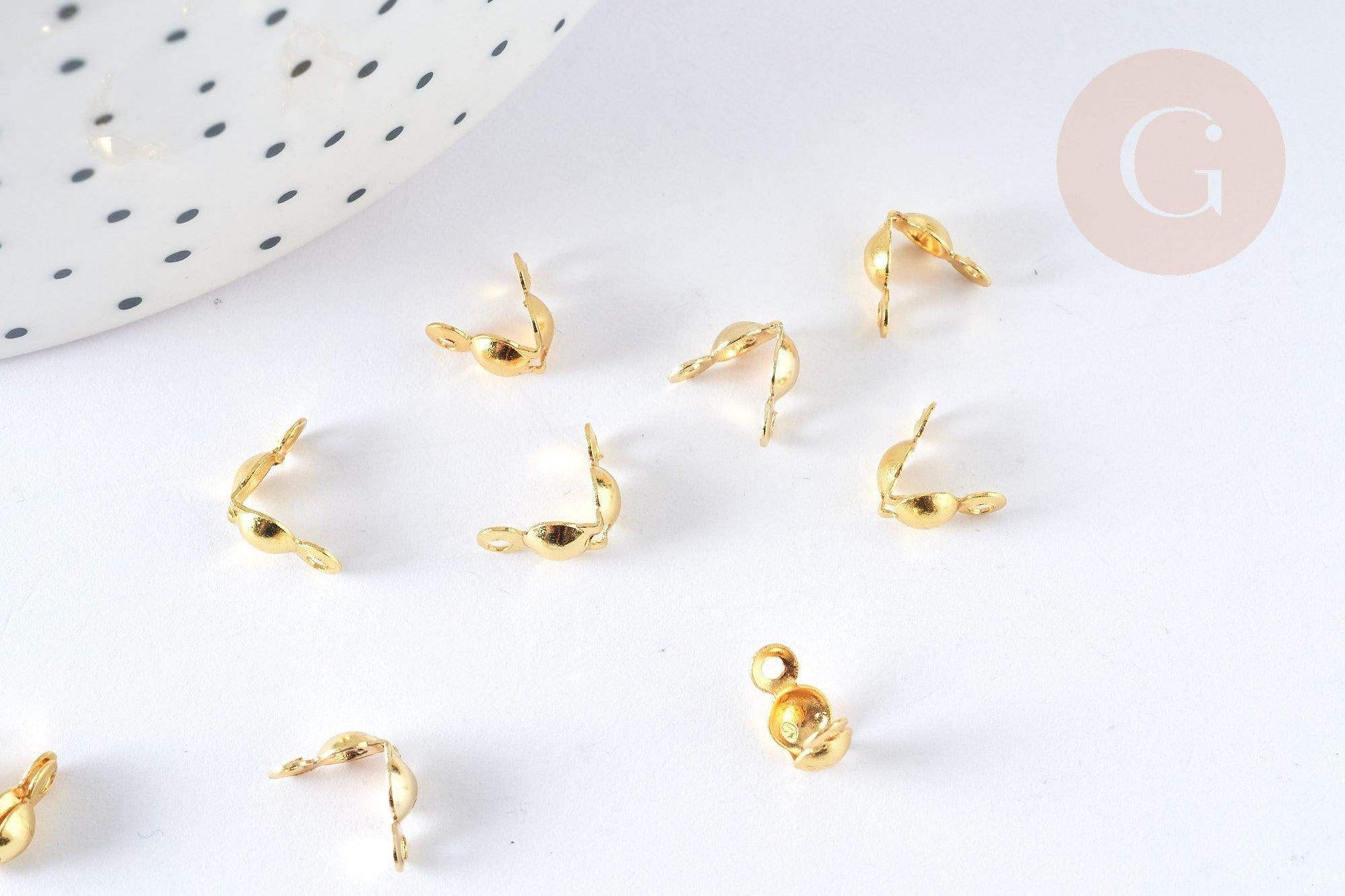
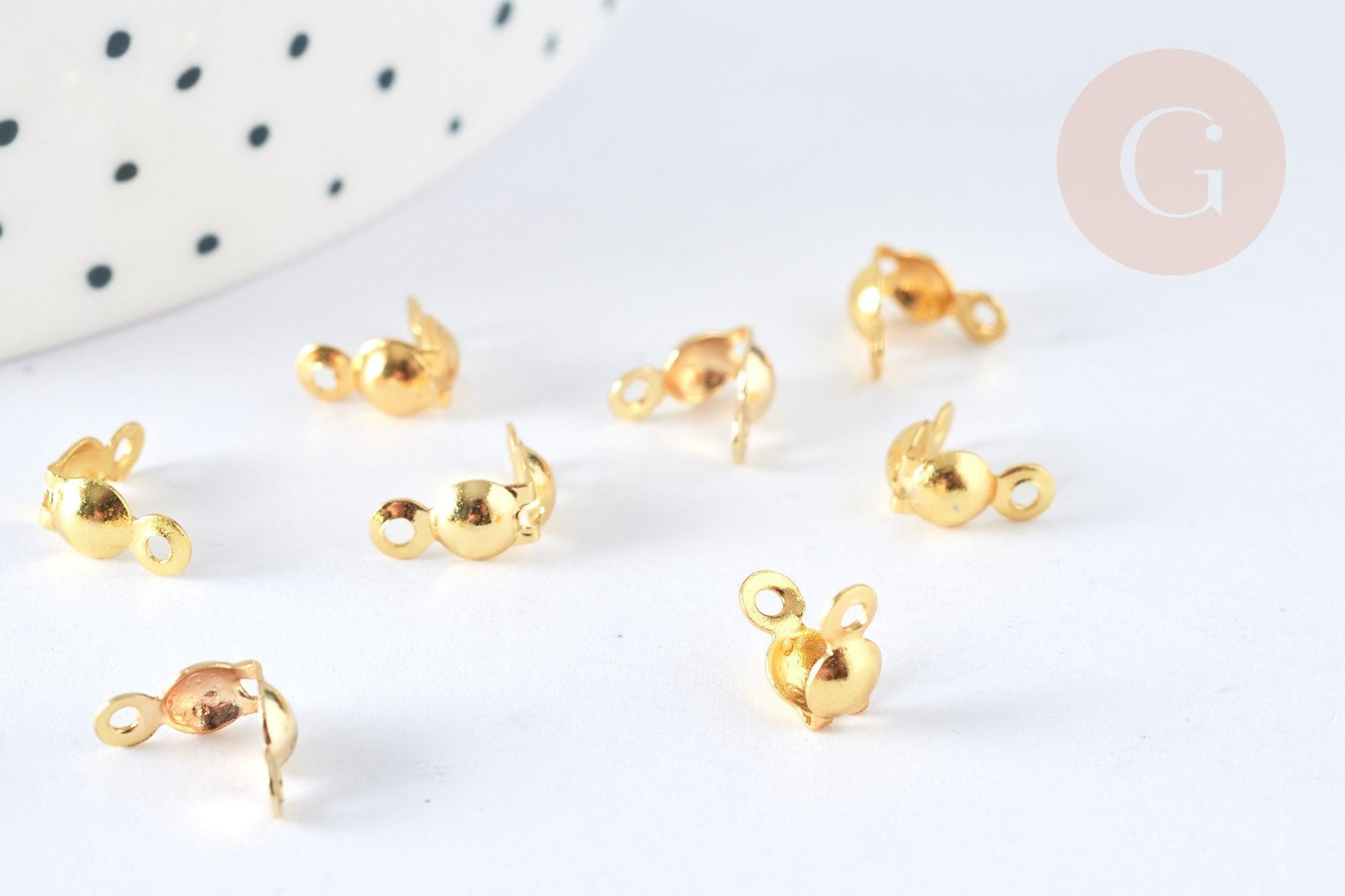
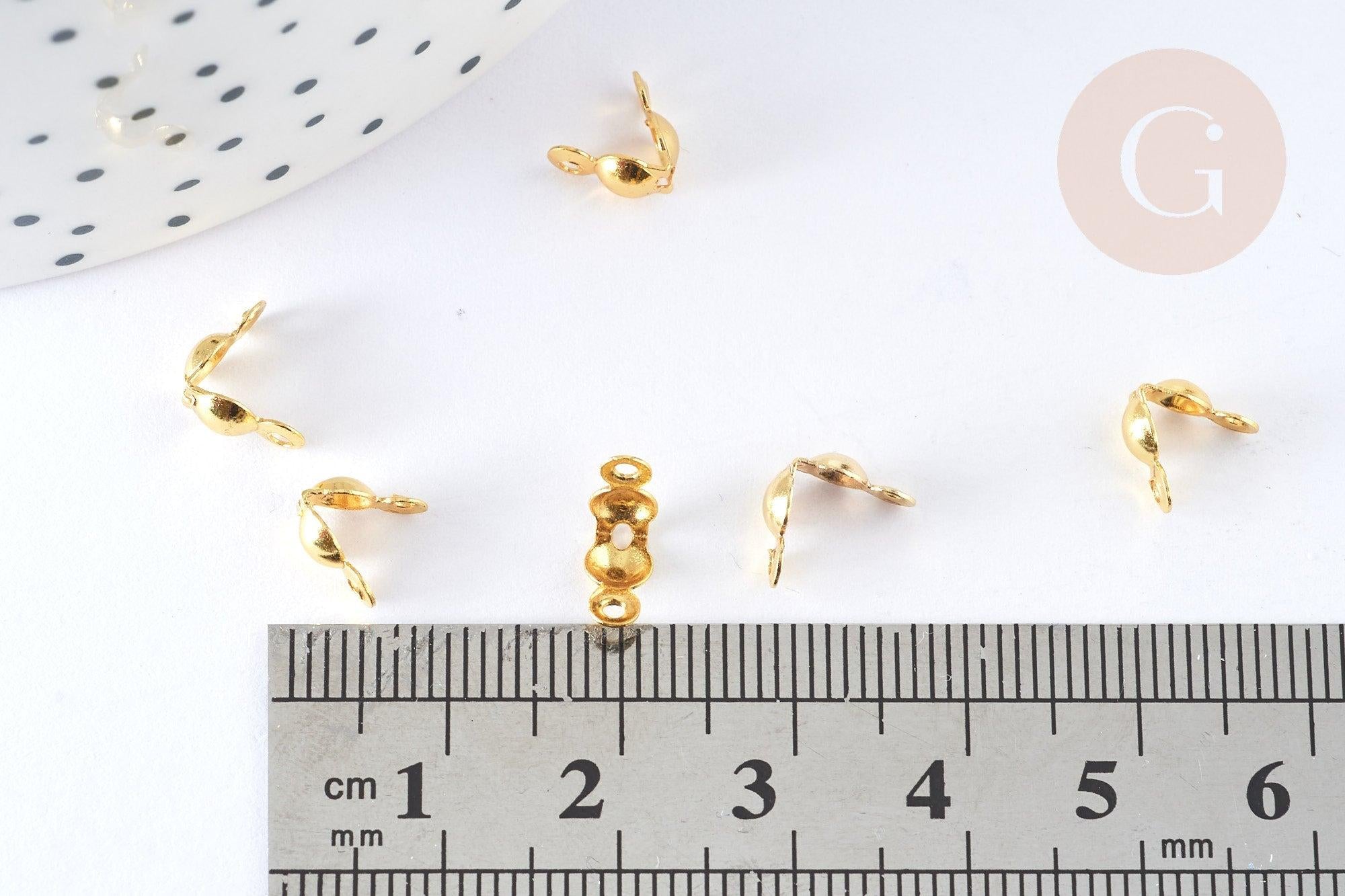
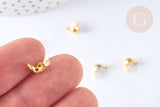
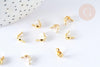
These knot covers are made of 304 stainless steel. Practical and elegant, these are jewelry findings to allow you to create DIY fashion jewelry with beautiful finishes.
How to use knot covers:
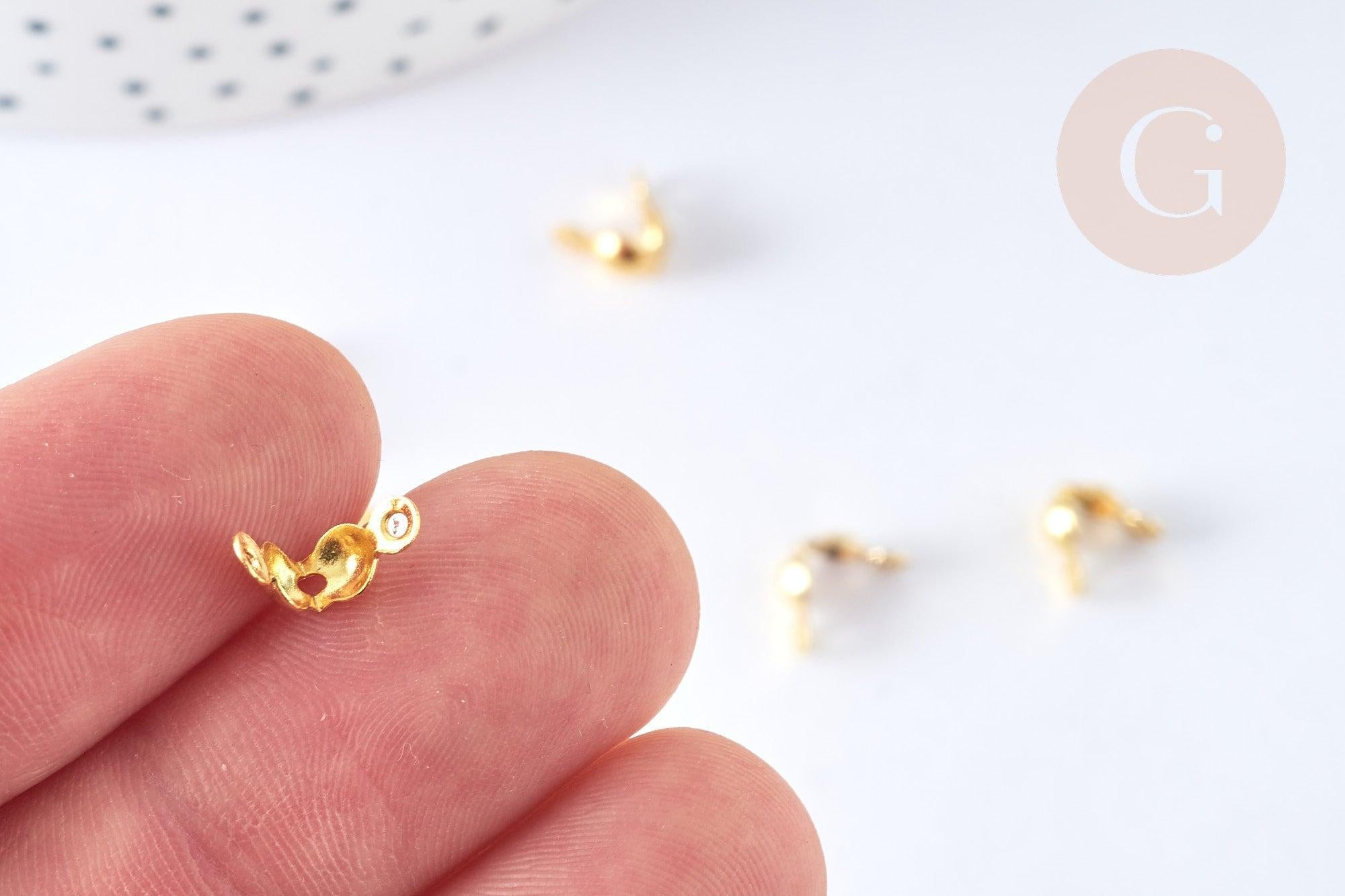
Simply thread your cord or chain through the hole of the knot cover.
Place the knot (or crimp beads) in the domed part and close it with flat-nose pliers without teeth. For added security, if desired, you can add a dab of jewelry glue.
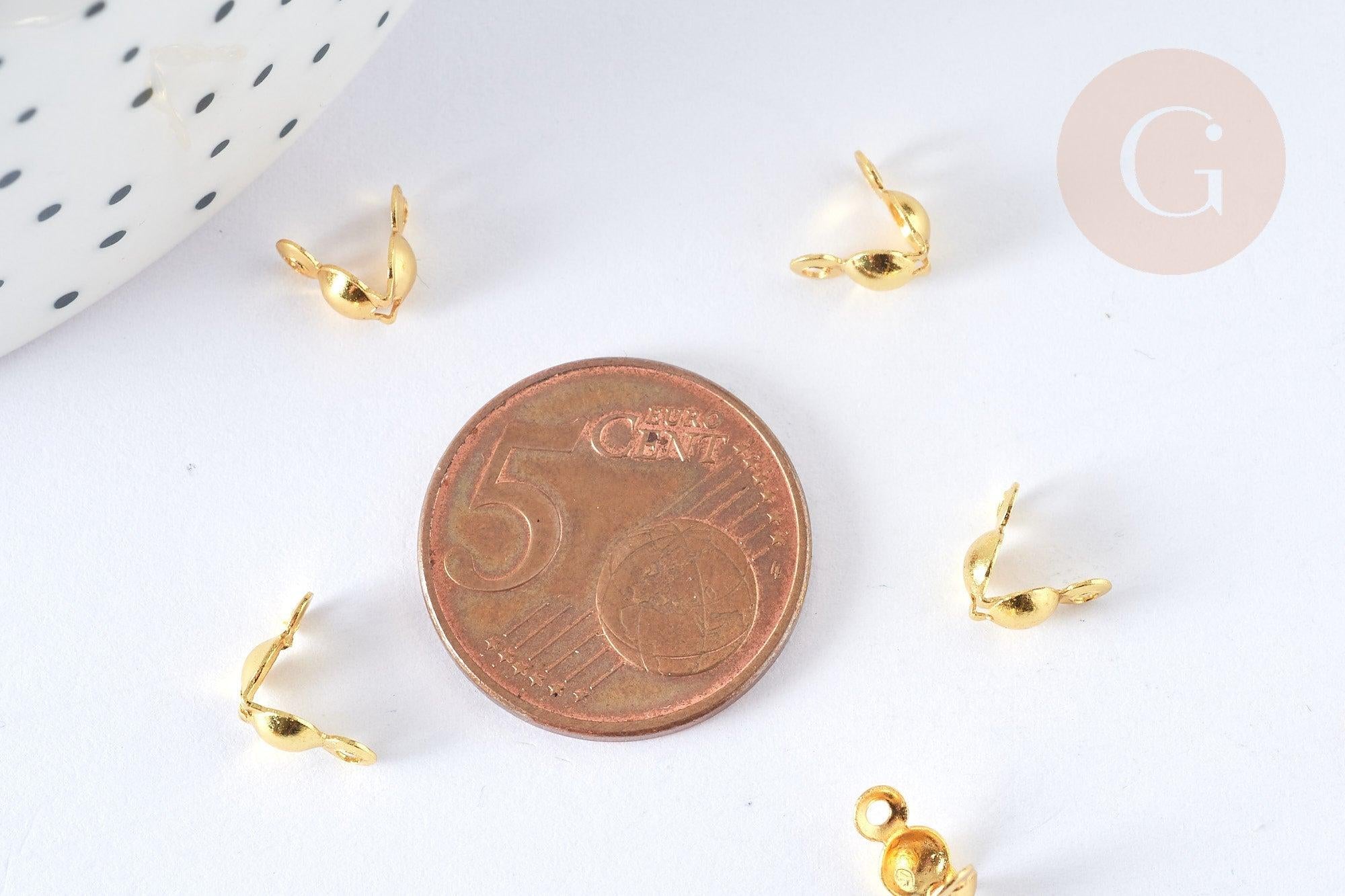
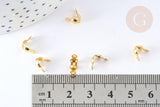
Dimensions:
Length: 7.5mm
Width: 4.5mm
Hole: 1mm and 1.5mm
Inner diameter: 4mm
Material: Gold stainless steel
Sold in packs of 10
Other knot covers in different materials are available on our online store Gingerlily.
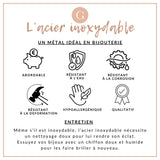
To preserve the beauty of your DIY jewelry, a few simple steps are enough:
- Avoid repeated contact with water, cosmetics, and chemicals to preserve finishes and gilding.
- We also recommend removing your jewelry before sports, swimming, or sleeping.
- Store your creations in a pouch or jewelry box away from humidity.
- Regular maintenance will permanently extend the shine of your creative supplies.
Consult our dedicated guide provided with your order to discover all our care tips.
FAQ – Stainless Steel in DIY Jewelry
What is the difference between 201, 304, and 316 stainless steel?
Different shades of stainless steel have slightly different compositions.
- 201 steel is an economical alternative often used in fashion jewelry.
- 304 steel offers very good corrosion resistance and excellent durability.
- 316 steel is particularly valued for its enhanced resistance to humidity and marine environments.
These three types of steel are commonly used in DIY jewelry making.
Does stainless steel contain nickel?
Some grades of stainless steel contain nickel in their composition, notably 304 or 316 steels.
However, when a product is indicated as compliant with REACH standards or "nickel-release-free", it means that nickel is not released in quantities considered problematic according to European regulations.
Stainless steel is thus widely used for jewelry intended for sensitive skin.
Does stainless steel jewelry rust?
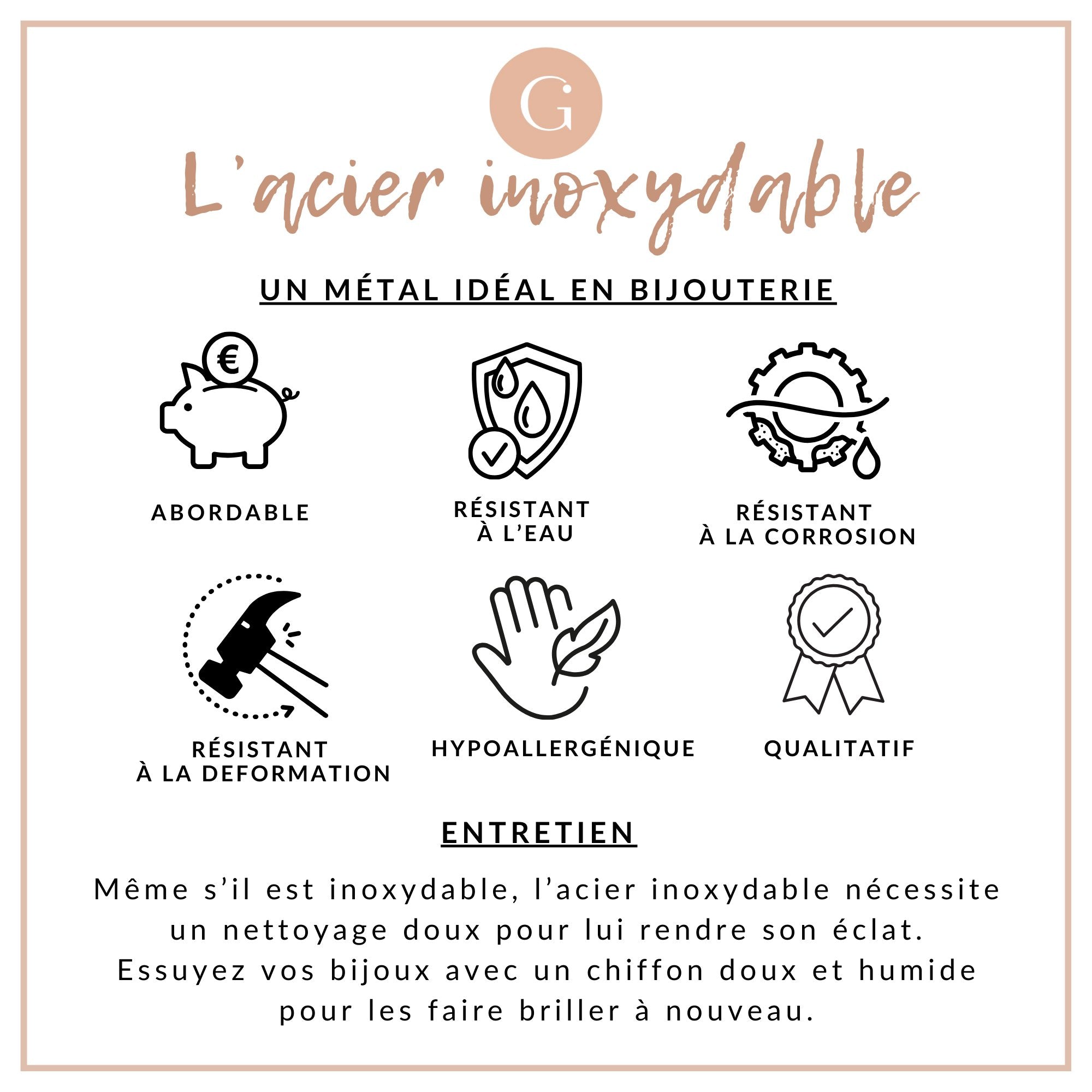
Stainless steel is prized for its good resistance to everyday oxidation and moisture. Unlike some metals, it does not rust easily when used under normal conditions.
However, like all materials, it can be damaged by certain chemicals, chlorine, salt, or repeated exposure to extreme conditions.
Why can gold-plated steel jewelry lose its color?
It is important to distinguish between stainless steel and the gold plating applied to its surface.
Stainless steel is highly resistant to oxidation, but gold plating can naturally fade over time depending on:
- the type of plating used,
- the thickness of the gold plating,
- contact with water, perfume, or cosmetics,
- repeated rubbing.
Therefore, a loss of gold plating does not mean that the steel is "rusting."
What's the difference between classic gilding, PVD, and IP?
Not all gold-plated stainless steel jewelry has the same finish.
Classic gold plating, often achieved chemically, can be more susceptible to wear.
PVD or IP treatments use a vacuum vaporization technology that allows for better color adhesion to stainless steel. These finishes are generally more durable for daily use.
Can you shower with stainless steel jewelry?
Stainless steel generally tolerates everyday water well.
However, to preserve the brilliance of jewelry and gilding for as long as possible, it is advisable to avoid:
- repeated bathing,
- chlorine,
- saltwater,
- perfumes and cosmetics.
A few simple precautions can extend the lifespan of your creations.
ADDITIONAL SUPPLIES
Discover complementary supplies to create a harmonious piece of jewelry down to the smallest detail.
Explore similar universes


The essentials to complete your jewelry piece
Beads, pendants, and findings recently viewed: find your inspiration in an instant.